 Türkçe
 English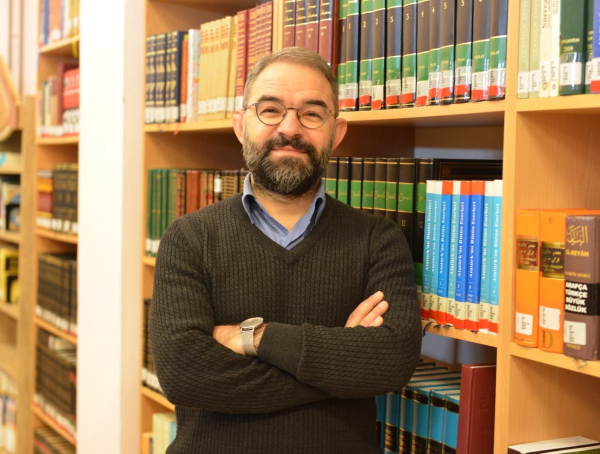
Foundation, City, Society: Institutions and Daily Life in the Ottoman World
Wakf, City, Society: Institutions and Daily Life in the Ottoman World — an exploration of the role of foundations (vakıf), urban life, and social institutions in Ottoman society
This seminar examines the Ottoman waqf system through the axis of “text–institution–city.” Prof. Dr. Hasan Hüseyin Güneş explains, through concrete examples, how waqf deeds are to be read and how the system extends from the founder to the trustee, from sources of revenue (akar) to the network of beneficiaries. The seminar discusses how public services such as soup kitchens, fountains, bridges, and libraries helped shape the urban fabric, and according to which principles they were connected to the provincial administration. Through selected examples from القدس and Anatolian cities, it explores in historical and sociological perspective how waqf networks sustained social solidarity.
Speaker: Prof. Dr. Hasan Hüseyin Güneş (Bartın University; Visiting Researcher, Harvard CMES)
Date: October 15, 2025
Time: 8:00–9:00 PM (Istanbul) · 1:00–2:00 PM (Boston, ET)
Duration: 1 hour | Format: Live / Online | Free
Assoc. Prof. Dr. Hasan Hüseyin Güneş is a historian specializing in Ottoman institutions and the history of civilization. After completing his undergraduate studies in the Department of History at Kırıkkale University, he earned his master’s degree at the same university with a thesis titled Caliph al-Ma’mun and His Era (803–833). He later focused on Ottoman urban history and waqf institutions in his doctoral dissertation at Afyon Kocatepe University, titled The Magharibah Quarter in Sixteenth-Century Jerusalem: Neighborhood and Communities.
Güneş began his academic career as a research assistant at Afyon Kocatepe University between 2010 and 2015. He served as an assistant professor at Bartın University from 2015 to 2016, and since 2019 he has been working as an associate professor in the Department of History, Faculty of Letters, at the same university. He has also served as head of the division of Ottoman institutions and the history of civilization. During 2023–2024, he was a visiting scholar at Harvard University’s Center for Middle Eastern Studies, where he conducted international research on Jerusalem waqfs, Ottoman urban life, and intellectual traditions.
Working with sources in Turkish, Arabic, and Persian, Güneş has published books, articles, and conference papers on the Ottoman waqf system, the history of Jerusalem, sectarian debates, and the Ottoman intellectual tradition. His academic interests are centered on Ottoman civilization, urban history, and manuscript studies.